May 13 2013

In a baseball state of mind

Published by under Baseball,Cape Cod,Cotuit

I painted the bottom of the boat yesterday and realized as I got more and more woozy from the fumes of the bottom paint (nothing like a lungful of a substance designed to kill barnacles and slime to make one feel good about one’s self) that it’s one of my favorite chores — not because of the satisfaction of the job well done — but because of the simple pure pleasure of listening to a baseball game on the radio.

Even though the radio broadcast a terrible game as  the Red Sox went down in flames on Mother’s Day,  listening to them do so, while outside on a splendid May afternoon, paint brush in hand, is one of those quintessential multitasking things that make me happy.

Then, this morning, in a grand birthday gesture, the Red Sox ticket office phoned to let me know my patient stint on the season ticket waiting list was over and I am now an official season ticket holder. I decided to start small and took seven games in the bleachers — where it all began for me so many years ago — and must confess to a feeling of personal real estate ownership out there by the Pesky Pole in right field in section L43, Row 32, on the aisle in seats 1&2. This is my view more or less.

myseats

At the hardware store yesterday — on one of three trips for screws, nuts, washers, etc. — the guy behind the register saw my Cotuit Kettleers hat, the nasty sweat-stained one I use for painting, and asked when the season was going to start: “June 12 at home against Orleans,” I replied, a Wednesday I will make sure I am in Cotuit for and not behind my desk in New York City.

The Kettleer newsletter arrived this weekend with the good news that the Cotuit Athletic Association has renewed Coach Mike Roberts’ contract for another three years. He’s been with the Kettleers since 2003 and is a genuinely wonderful man, the kind of guy who appears out of nowhere on the morning of the Library’s annual book sale to help lug boxes of books out of the basement and onto the tables set up on the front lawn. Coach Roberts is a baseball legend. He coached the Tarheels for a very long time, is the father of Baltimore second baseman Brian Roberts, and headmaster of the Roberts School of Cape Cod Small Ball, his annual training camp for the best  collegiate freshmen and sophomore ball players in the intricacies of the hit-and-run, sacrifice bunts, the double-steal, and even, swear to god, the hidden ball trick. One of his proteges, Vanderbilt’s Mike Yaztrkemski, was the subject of a great Tyler Kepner profile in the Sunday New York Times.

With a new snackbar and restroom, the ball park is looking sharp for the 2013 season, testimony to the CAA’s fundraising efforts and the loyalty of Cotuit’s fans.

4 responses so far

May 09 2013

Sharpening the hooks

Published by under Cape Cod,Fishing

The lilacs are about to bloom, the lily-of-the-valley is coming up behind the kitchen and my birthday is only days away which can only mean one thing:

The fish are back.

Or should be back. They weren’t here  last weekend. I went out twice and was skunked both times, but that’s part of the fun of spring fishing. Fisher, Cousin Pete and I kept the local waters honest on Sunday with a brave slog out of the Wianno Cut to Lone Rock in the Good Ship Wet looking for squid. Pete saw the squid fleet arrive and depart a few days before, so either the squid run isn’t happening this year, or the squidders got out too early because the Cape is  experiencing a delayed spring with lower than usual water temps brought on by a thoroughly shitty winter. Who knows. Maybe this weekend.

On Sunday we cast our squid jigs down to the bottom, bounced them up and down —  little pink torpedos festooned with pins which supposedly tick off the squid who attack them in the belief they are fish after their eggs. These are good eating squid and the big fleet of commercial fishermen who line the horizon of Vineyard and Nantucket Sound the first week of most Mays are testament to their value. Pete, Fisher and I like to catch them for dinner and to put away some in the freeze for fluke and striper bait later in the season, but I hear these are really prized squid for the table and command a high price on the market. On a good day an angler with a single rod and a couple jigs can easily fill a 5 gallon bucket. I’ve learned that a half-dozen are all I need. They are a pain in the ass to clean and according to one local expert, rinsing them in fresh water ruins them — apparently  only saltwater should be used. I can’t cook them. Squid confound me. Always come out tougher than inner tubes. Like fish flavored rubber bands. Some say to either cook them for ten seconds or ten hours. And as for calimari? That was a disaster. My attempt to clone the awesome grilled squid from Inaho in Yarmouthport?  A cat wouldn’t consider it. (digressionary recommendation: Jiro Dreams of Sushi, fantastic documentary on the sushi master of Tokyo, the first to get three Michelin stars).

Squid are very fun to catch — they change colors like a hippie lightshow at the Fillmore, blast jets of black ink in protest, and, if handled correctly while being de-pinned from the jigs, can be aimed at one’s fellow squidders to coat them in the stinky stuff. The boat is always a disaster afterwards. My old friend Bob used to go out with a bunch of beer, dressed in a white painter’s pants and a white wife beater just to really get down and dirty in the ink.

Anyway, we rolled and staggered with our yet-to-be-learned sea legs, beam-to in a big Nantucket Sound swell coming out of the southeast (“Wind east, fish bite least”) and even though it was very nearly shorts and t-shirt weather back at the house, the ocean still feels downright March-like. I need to check the water temperatures, but we were bundled up in fleece and windbreakers and may stay that way until Memorial Day.

Ten minutes squidding and there was nary a sign of them at the rock, so we ran in with the seas to the Cotuit channel, switched the squid rigs for day-glo orange surface plugs  – Rangers and Ballistic Missiles — and made a half dozen big casts to see if we could induce an early bluefish scout to attack. Nothing happening. So we ran all the way up inside of the bay, beached the skiff at the west end of the Narrows, and threw little Rat-L-Traps and Sluggos into the channel looking for a spring schoolie striper. Nothing there either, so we cracked a beer, shrugged and decided we were a week early.

I’ve caught bluefish in late April. There were squid around, so that may explain the missing link. I used to catch tons of striped bass this time of year, tagging them for the American Littoral Society — but I’m not so into catch-and-release anym0re, not wanting to mess up a fish just for the sport of playing it on light tackle. The Cape Cod Times is reporting a keeper-sized bass taken in Cotuit (I need to check what the rules are now, in my mind a “keeper” will always be 36″), as well as a bluefish off of Popponesset, so I know where I will be tomorrow afternoon when I return to the Cape from NYC.

And, to kick off the piscine season, I even remembered that the Commonwealth now requires a saltwater fishing license, and like a good citizen I paid the state my $11 bucks for the slip of paper. The regulars at Reel-Time used to get all heated on the topic of licenses. Libertarian anglers are pretty common. Me, I favor licenses if the funds are earmarked for fishery protection and yes, I believe striped bass should be declared a gamefish and put off limits to the commercial guys.

My son wants to learn the maddening art of fly fishing this year, so I cleaned up an old Scott 1o-weight and will get him going on the lawn this weekend, elbow tucked into his side like he was holding a bottle of gin, casting with his forearm only, stiff wrist, making a long oval in the sky with the rod tip, double-hauling, feeding out more and more line until he turns into a regular Lefty Kreh.

As for the tackle shop that lives in my garage…. well, it’s also where I store the galvanized garbage cans full of bird seed — so the rodents have infested the drawers and cabinets with their balls of  fuzz and sunflower husks, peeing all over everything and probably exposing me to some ugly hantavirus. I found one fly rod case with the end chewed off and a family of field mice inside. Little $%^%^&&%$#’s …..I’m buying a lot of moth balls and will see if I can resort to chemical warfare to keep them away.

There are few OCD pleasures in the world that compare with fiddling around with fishing tackle. I’m an obsessive when it comes to the old saying that most fish are caught the night before. Bimini twists, wire leaders, split rings, new 4/0 trebles on the bluefish plugs, splicing 30 lb leaders onto the striper rods with Albright knows and a bead of Pliobond rubber cement to ease the knot through the rod tip; cleaning the fly lines, cataloguing the flies and putting together a box for early season bass, poppers for bluefish, a hookless plug so I can use a spinning rod to tease the blues up to the fly fisherman; leaky waders, wader belt, line basket……the list is staggering, but given the evil price of tackle these days, it pays to scrounge the high water wrack line on Dead Neck every fall for the plugs and lures that wash up there. For the price of a new hook and a little TLC I can resurrect a $10 lure and absorb some of my own losses due to bad knots, boneheaded casts, or overpowering fishies.

Found money — an old wooden popper found on the beach with the paint worn off

3 responses so far

May 01 2013

Old Shore Road changes

Published by under Cape Cod,Cotuit,General

update: duh, thanks to andy for pointing out this post was originally entitled “Old Post Road)

Last week the town surveyed Old Shore Road and the stretch of Putnam Avenue/Maple that runs along the Ropes Field. Lots of wooden stakes with pink ribbons popped up and then a gaggle of town officials toured the area on Monday — part of a larger village tour organized by Cotuit’s town council representative, Jessica Rapp-Grassetti, Precinct 7.

I talked to the councilor this morning about the Old Shore Road situation. There’s a few of issues at play so I’ll just relate the highlights:

  • Old Shore Road is one of the most important points of access to the waterways and its usage is pretty intense and crowded during the summer season. Parking and congestion and blocking homeowners’ driveways are issues.
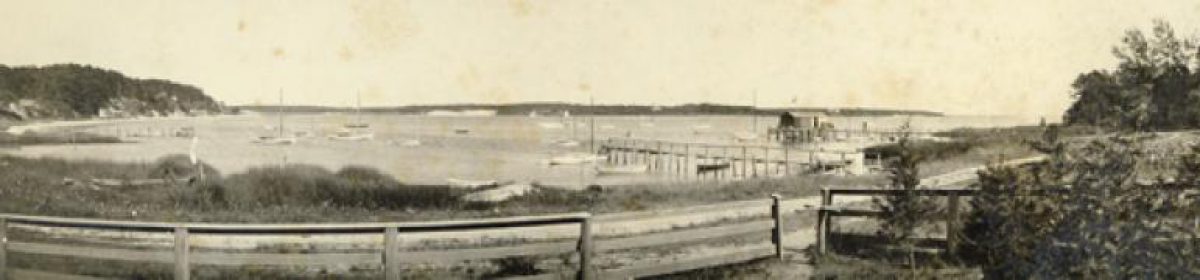
  • The boat ramp at the foot of the hill was improved a few years back, changing a nearly unusable sand “ramp” into a durable launch ramp that Cotuit long needed but that has attracted more vehicles and trailers. These take up a ton of parking space — at least two ordinary parking spots — and can clog up the traffic leading to one-way standoffs between two cars trying to pass in opposite directions. This is a scenic vista (see the header image on this blog) so there are lots of people who drive down to look at the water, eat their lunch in their car at the seawall, and watch their kids take their sailing lessons at the yacht club.
  • The public beach at Ropes — which isn’t in the best of shape — has gone from an official bathing beach in the 1960s complete with bathhouse, water fountain, and lifeguards to a little piece of sand encroached by a mob of dinghies, kayaks, catamarans, paddle boats, and other little watercraft. Still a popular sunbathing spot but swimming isn’t advised. Water quality is iffy (Councilor Grassetti has persuaded the town to resume testing there and at Riley’s Beach, something the town stopped doing for cost reasons and which Three Bays assumed responsibility for last summer) and the bottom is pure black clam muck.
  • The beach has been invaded not only by dinghies and little watercraft, but phragmites, the tall rushes that choke things up. A freshwater spring flows here — where the little footbridge stands — and there is a lot of endangered banks that hold saw grass, mussels, etc..  The town has been working with the Civic Association and concerned villagers to clean that up.
  • The little strip of public beach is also where the yacht club conducts sailing lessons, the Cotuit Rowing Club launches its shells, and groups of kayakers converge to launch for a paddle around the bays. Getting from the parking lot to the water involves a narrow path. People walk their dogs on the beach out to Handy’s Point. Fishermen use it to get to the stripers. Clammers …..

Take one very popular road serving one of the better boat ramps in town and one of the best  points for recreational access to the water and Old Shore Road is under some pressure.

The town made the smart decision three years ago to ask dinghy owners to get all boats off the beach between November 15 and April 15 (which sucks for me as I keep my boat in the water 10 months a year and have to remove my only way out to my boat during the closed off-season months; exemptions are given to commercial interests like shellfishermen and mooring servicers, but Joe Boater like me is out of luck). This identified the derelict hulks and give the grass and mud banks a chance to recover and get some air and sunlight over the winter. That probably won’t solve the problem of where to put them so the town may have to go to a dinghy permit/registration system much as it did with moorings in the late 80s. Too much demand and not enough room means some system has to be in place to put a cap on the proliferation of little boats. Oh for the good old days when my father would throw a wooden skiff on the bank without thinking twice. Those days of unregulated, uncongested use are as long gone as clear water, eel grass and schools of scup.

Thomas Fisher hanging out on the beach by Old Shore Road

The town wants any dinghy owners who have built racks or put down wooden pallets to remove them.

Possible traffic solutions include:

  • No trailer parking north of the boat ramp to the seawall at Ropes Beach, only up the hill north of the rowing club and west up the hill towards Main Street
  • One way traffic from Main Street down to the ramp, and two way traffic from the hill at the top of Putnam down to the parking area in the beach. This would let parents drop their kids off for sailing and turn around exit the same way they came down to the beach.

I’d like to see the road closed to sightseeing before hurricanes when boat owners are rushing to haul their boats out at the ramp. I feel sorry for the people who drive down hoping to see nature’s fury and instead find themselves in the middle of a traffic jam as eight trailers wait their turn to back down the ramp. The police should put up saw horses at each end of Old Shore and only let boat owners in during the short window when the hauling happens.

This is a great spot, literally my backyard, and one of the jewels of Cotuit. Getting the cars, the forest of signs, the clutter and the pressure off with a few rules and changes seems a good thing to me. Heaven forbid someone decides it’s a good idea to widen it and turn it into a trailer parking lot. That I would oppose.

Jessica said the next meeting of the Conservation Commission on the island dredging project is May 15.


2 responses so far

Apr 25 2013

Karen Hill: 1940-2013

Karen Ann Hill passed away this week after suffering a fall. She was 73 years old and arguably the best known face of recreational fishing on Cape Cod.

For Karen owned Sportsport, the little tackle shop in Hyannis that she inherited from her father, a beloved institution marked by the familiar sight of the Old Salt fishing in the parking lot wearing yellow foul weather gear, rain or shine. I knew the Old Salt before I ever met and became friends with Karen. It was one of those icons I first saw as a kid and have carried with me ever since, despite how much the rest of the Cape changes around me. Some motorist took him out a couple years ago. Karen had sold the shop already and retired. But the new owners knew that Sportsport wasn’t Sportsport without the bearded man in the red boat, and he fishes on to this very day.

I didn’t get to know Karen until 1991 when I first moved to Cape Cod full time to raise my family. Churbucks weren’t a fishing family when I was a kid. My father prohibited fish (aside from frozen Gorton’s of Gloucester fish sticks served to his kids) from ever being served (some old dislike he probably picked up in the 40s when a bluefish was about it when it came to protein for the table) and he certainly didn’t fish but he sure loved to clam. My grandfather wasn’t a big fisherman as I recall.. So there weren’t a lot of the father-son-grandpa-bonding-over-fishing-scenes in my youth. When I did fish it was with my brother, a dropline and a cracked open quahog from the Town Dock for scup and eels, the latter species terrorizing me.

When I became a townie in 1991 I noticed the locals all driving around with fishing rods on their roof racks in the early spring and fall — something was going on that I didn’t know about and I decided I would take up fishing. Obsessive maniac that I become when I really get into something (fishing, Italian bicycles, watching complete archives of a TV series in one binge), I started to really get into fishing, developing a fishing jones I couldn’t appease. I read nothing but fishing books, bought nothing but fishing tackle, and coveted rods and reels like a sex fiend. I woke up at 3 in the morning to fish. I fished at 10 pm in January during a snowstorm on a beach in Sandwich  near the Cape Cod Canal on the stupid hunch that I might catch a tom cod. I didn’t but it was worth it for the story. I risked drowning night after night standing in the foaming surf on sandbars off the beach in Chatham fishing for a “keeper” (a striped bass over 3-feet long) and marveling at the wildness of the stars and the Atlantic all in front of me. I waved a fly rod so much in the wind that my shoulder fell apart and I had to stop for six months of physical therapy.  They say there are 365 fresh water ponds on Cape Cod? One for every day of the year. I tried to fish them all. Livelining, chumming, trolling, roll casting. You name it, I wanted to try it.

I even started “the Internet Journal of Salt Water Flyfishing” – Sportsport was the first advertiser.

And Karen Hill fed my habit. I basically moved her tackle store ten miles west into my garage over ten years, one sinker, one bobber, one hook at a time. I could have betrayed her and gone online, but that would have meant missing out on the unique retail experience that was Sportsport under Karen’s ownership.

First, there was no such thing as “ducking in real quick” for something at Sportsport. Karen never rushed. Ever. Stepping inside the door and getting out again in under 30 minutes was a miracle. The place could get very busy, and Karen would be winding new monofilament on somebody’s reel while a mob fidgeted to pay for their bait and get back to the fish. She had to hang up the phone to swipe a credit card. She totalled up all the little bits of fishing stuff — swivels, lures, buckets of writhing eels — on a scrap of paper, totalled it up on a calculator, and then put the total into the register. She usually swore at the register.

Second, she was the CIA of Cape Cod fish. If there were rumors of fish, Karen heard them first. And to get her to part with this intelligence meant buying something, even if it was a $0.30 lead sinker. eCommerce fishing tackle sites doesn’t whisper to you that “they’re murdering them at Dowses on purple Deadly Dicks” A photo of one’s self on the door of the bait refrigerator meant you were a made man. Cousin Pete and I schemed to freeze an October bluefish until February (they migrate to the Cape in May), thaw it out, drive it to Hyannis, and ask Karen to take a picture of us holding the earliest bluefish of the year for the fridge. I regret we never did it. She would have howled and called bullshit and then taken the picture anyway.

And then there was Karen’s School of Fishing. Feeling bored and beset with cabin fever on a sunny day in early April, weeks before the stripers and blues return? Karen would teach me the ins and outs of fishing for winter flounder and I’d walk out $50 poorer with flounder rigs, a chum pot, and the advice to fill it with crushed mussels and cans of cat food.

Her assistant Mark became a good friend and great fishing buddy. We sort of enabled each other’s addiction and would drive from one side of the Cape to the other just to catch the favorable tides at Menahaunt on the southside and Bone Hill on the north.

But most of all Karen was a friend, a good wise motherly lady in a business not known for a lot of ladies. She was blessed with a great sense of humor, a way of making you feel you were the most important customer she’d seen all day, a great laugher, and a true Cape Codder;  a veritable Old Salt herself.

One of the greats has passed. I’ll kiss my next fish on the head and let it go to swim another day just for Karen.

2 responses so far

Apr 24 2013

3 Ways to Write an Annoying “ListLine”™

The recently departed Al Neuharth — the man who gave the world McJournalism when he created USA Today in 1982 — was famous in my mind for two things (no, make that three, because this is a post in part about the magic powers of “three”):

  1. Always publish the tits above the fold
  2. Bulleted lists are better than paragraphs
  3. Infographics that twist statistics and invoke the Royal We into cartoons are engaging

People love lists. Decades ago there was a bestseller entitled “The Book of Lists,” a classic toilet-side tome in many a household. There are  management books about the power of to-do lists.  I must have at least three or four list apps on my phones and tablets and PC. Most horrible is the tendency of the lower life forms in online journalism and especially digital marketing/SEO/Content marketing bloggers to use lists as linkbait. There are so many headlines about “Three Ways to Increase ROI” and “Four Ways Content Marketing Can Engage and Delight Your Customers” that I have to wonder what’s driving this obsession with numerical sequence.  I know that if I click through to actually read the stuff I’m going to read some airhead social media/digital marketing “guru’s” rehashed airheaded jargon twisted bloviations.

Working off off my feeds this morning  I found this actual set of … oh hell, let’s just call them “ListLines™“, e.g. headlines promoting lists:

  • 13 Smart Podcasts That Will Feed Your Hunger for Knowledge and Ideas
  • The 45 Best Restaurants in America (BusinessInsider is a huge fan of  ListLines™, generally cutting up the content into slideshows to pump up the pageviews). They have a daily list which is semi-useful called …..
  • Ten Things You Need To Know
  • 10 Habits of Remarkably Charismatic People
  • We Try 4 New Electric Hot Water Kettles for Coffee and Tea

The king of the numbered ListLine has to be the Content Marketing Institute, which on its home page has the following headlines, and all save one has a numeral in it:

  • 4 Truths About Content Marketing Clients
  • 6 Tips to Start Creating Content on Tumblr
  • 3 Tips for More Effective Content Marketing Visuals
  • 9 Questions to Help You Prioritize Content Creation
  • 12 Roles Essential to the Future of Content Marketing
  • Thought Leadership Strategy: 3 Ways to Leverage Live Event Content
  • 3 Tips for Keeping Your Buyer Personas Fresh and Alive
  • How Enterprises Handle B2B Content: 6 Key Insights From Our Research

McKinsey, the organization that lives on PowerPoint, had an unofficial Rule of Threes during my short stint– as in no slide should have more than three bullet points on it because that was all the typical audience member could hold in their head during the time it took the expensive consultant to present the slide. McKinsey was into numerology in general and the place should have had the Pareto Principle inscribed over the door as its motto (the “80/20″ rule). I admit I stick to the Rule of Threes to this day.

My theory about the abuse of the numbered list in online headlines is the corruption of editorial good sense by the scuzzy underworld of Search Engine Optimization and the Tyranny of Metrics. Let’s turn to the experts at the Content Marketing Institute, enter in the search term “lists” and what do you know? In a post entitled “Content Strategy: 9 Secrets for Awesome Blog Post Titles“, Tracy Gold writes in item number 5:

“We all groan about numbered lists in blog posts. But the truth is, they work. In our research, titles that began with a number performed 45 percent better than the average.

“Another approach is to start with a keyword and include a number later in the title. Take “Content Marketing Checklist: 22 To-dos for SlideShare Success,” for example. We tested both title types, and when the headline started with a keyword, it actually performed slightly better.

“While one approach to this method is to work more numbered lists into your blog content strategy up front, you can also use a numbered list in a post after it’s written. Is the post split up into sections? Can those sections be numbered? Boom. But again, don’t mislead your readers — make sure a numbered list format actually fits the content of your post.”

Now we know the secrets of the masters. My theory is by announcing ahead of time how many pieces of b.s. the reader will have to digest, they figure they aren’t in for a reading of Procopius History of the Early Church and can snack on the info before their Adderall buzzing brain clicks them away.

Before closing, let me digress back to USA Today and my indoctrination into the art of the list.

I worked at a newspaper — The Lawrence Eagle-Tribune — that rented its color presses to print the New England edition USA Today at night, receiving the pages via satellite and then churning out the colorful McPaper so familiar to residents of the Marriott Courtyard Suites. This close relationship unfortunately colored the judgment of Eagle-Tribune editor-in-chief Dan Warner, who decided that Al Neuharth was a visionary genius and that the Tribune’s staff  would learn to write lists instead of stories and develop “infographics” about Why We Love Ice Cream,” complete with a cartoon of a melting ice cream cone, a gushing thermometer and some made up statistic about what flavors “We” preferred.

This was strictly enforced to the point that every story opened with a classic lead (my favorite lead of all time, courtesy of Edna Buchanan, the legendary police reporter of the Miami Herald is cited below*), a standard second paragraph, and then an inevitable list of bulleted items before the jump to an inside page.  I would pile into the newsroom after a scintillating evening covering the Salem, New Hampshire board of selectmen and pound out some lifeless copy (“This ain’t a short story about your dead grandma bub, so get over it” my editor, Al White, told me after taking a machete to my first story about a sewer bond hearing) that always had a bullet list up high where Dan Warner would be sure to see it. Hence:

“In other actions, the board voted to:

  • Ban pit bulls from playgrounds
  • Postpone a hearing on bingo licenses
  • Authorize door-to-door cigarette sales by Brownie Troop 5
  • Commend Police Chief Nickerson for Sunday’s arrest of undercover Massachusetts State Policemen harassing Bay State liquor and fireworks customers

At first the mandate to use bullet lists offended my delicate Strunk & White sensibilities about prose composition.  One of the joys of great writing is a well-written list, contained in a single flowing sentence, ordered just so to delight the ear and paint a picture in the mind’s eye, but alas the world has become addicted to the staccato stack of one-liners preceded by the bold typographical dot and so I have given up all hope of resistance.

But I know in my heart of hearts that William Faulkner never wrote a bullet list in his life or worried about SEO.


*: Calvin Trillin, profiling Buchanan in the New Yorker: “In the newsroom of the Miami Herald, there is some disagreement about which of Edna Buchanan’s first paragraphs stands as the classic Edna lead. I line up with the fried-chicken faction. The fried-chicken story was about a rowdy ex-con named Gary Robinson, who late one Sunday night lurched drunkenly into a Church’s outlet, shoved his way to the front of the line, and ordered a three-piece box of fried chicken. Persuaded to wait his turn, he reached the counter again five or ten minutes later, only to be told that Church’s had run out of fried chicken. The young woman at the counter suggested that he might like chicken nuggets instead. Robinson responded to the suggestion by slugging her in the head. That set off a chain of events that ended with Robinson’s being shot dead by a security guard. Edna Buchanan covered the murder for the Herald—there are policemen in Miami who say that it wouldn’t be a murder without her—and her story began with what the fried-chicken faction still regards as the classic Edna lead: “Gary Robinson died hungry.”


3 responses so far

Apr 23 2013

If I owned the Cape Cod Times ….

The Cape Cod Times and its sister weekly, The Barnstable Patriot, are for sale. News Corp has put them on the block, after picking them up as part of the deal that saw the company acquire the Wall Street Journal from the Bancroft Family and Dow Jones.

I started my journalism career at the Cape Cod Times as a “special writer” the summer after graduating from college in 1980, a sad summer spent sorting out my father’s affairs after he died the March before in a car accident. The Times was a refuge for me, an incredibly rich world of facts and deadlines and mordant wit that proved to be just the antidote for a grieving 22-year old. I will always be indebted to Bill Briesky, Milton Moore, Peggy Eastman and Don Brichta for their patience and good humor in teaching me the rudiments of reporting.

A few weeks ago, while speaking to the Cape Cod Technology Council, someone asked me about the Times now that it was for sale. That was news to me. I hadn’t heard, but yes, it is true and ever since I heard the news I’ve occasionally thought what I would do if I owned a local paper in this parlous time of upheaval and transformation in the media world, one I suppose started the summer I worked at the Times when it was only a few months away from moving off of typewriters, scissors and rubber cement to one of the first computerized editorial systems. I take huge pride in having seen the very end of the analog era, of having literally performed “cut-and-paste”, and then hung on as the momentum began building towards the place where papers stand today, devoid of advertisers and readers, their staffs fleeing for shelter.

I believe a strong civil society needs a newspaper in some form: paper or digital or whatever.  I am an idealist who clings to those Jeffersonian ideals of an independent fourth estate that informs the electorate, comforts the afflicted and afflicts the comfortable. I don’t believe in journalism schools and I don’t regard journalism as a profession but see it more as a craft.  I applaud a world where anyone with the ambition can try to become a citizen journalist. I pay for good news. I can’t imagine living in a community without a definitive source of news. Without one the world will quickly become a darker, more ignorant place.

If I owned the Cape Cod Times I would do the following things:

  1. Stop printing it. I’d  have the presses in Independence Park  dismantled, placed on barges, and towed away and give them to a third-world country that needs a big honking press. Rip off the bandaid.
  2. Sell the trucks and fire the drivers. No press, no paper, no trucks, no drivers, no gas.
  3. Double down on local news. Put a reporter in every town on the Cape and Islands. Let them work from home, but get them as local as possible. It’s all about local and local is the only thing unique to the franchise. Not the AP wire. Not the Red Sox scores. But the local sports, the local planning board, the church socials and the bake sales. It’s local local local. The thing that has been weakest about the CCT in recent years is its local coverage at a time when it was the only defensible turf the paper stood on.
  4. Pay the staff a decent base salary with the usual performance modifiers based on traffic and comment engagement.
  5. Have reporters moderate their readers’ comments and engage with the mob directly.
  6. Provide a citizen’s blogging platform and use it as a farm system for full time talent to join the masthead. Extend the platform to any group, advertiser, or gadfly who wants it under a liberal acceptable use policy
  7. Launch a digital news radio station and go on the offensive
  8. Push harder on video. Eric Williams and CapeCast is the diamond in the rough I think.

And how would I pay for it all? Well, if wishes were fishes and all that ….

  • Drop the paywall. I hate paywalls. The New York Times can get away with them, but the Cape Cod Times needs as many readers as it can get and charging the loyal readership is like penalizing an act of goodness.
  • Local advertisers are already in bad shape thanks to eCommerce hammering local retailers. There are too many alternatives where they can spend their small ad budgets, so rates need to be slashed on display which are largely programmed buys via ad networks anyway. I’d kill display advertising to tell the truth. The banner is dead or dying.
  • Bundle a SMB digital marketing service and re-sell it to the advertisers: Lexity for ad buys, Hubspot for digital marketing, etc.. Offer digital marketing services as a value-add to the advertisers and wean them from local radio (there’s is very little local TV on the Cape to worry about). SMBs are starving for help with digital.
  • Restructure the rate card around sponsorships and give the advertisers ownership of a topic or section. Get away from run of site and give them some “adjacency” to the editorial
  • Provide lead generation support to advertisers emphasizing one-time unique coupon redemption for attribution and ROI justification

That’s it. Who knows if it would succeed, but I am convinced an emphasis on local news/sports, digital radio and video, and a big commitment to SMB digital marketing services could carry the Times forward until the next big unforeseen disruption. What do I think will happen? Some private equity-backed community newspaper roll-up will probably buy the Times for a song and gut it on the altar of efficiency and centralized management.

2 responses so far

Apr 22 2013

Broken news: the lesson from Boston’s journalism school

Published by under General,Journalism

When the President of the United States tells the press in a nationally televised address that it needs to get its act together, you know the Fourth Estate is in very, very bad shape.

“In this age of instant reporting and tweets and blogs, there’s a temptation to latch on to any bit of information, sometimes to jump to conclusions. But when a tragedy like this happens, with public safety at risk and the stakes so high, it’s important that we do this right. That’s why we have investigations. That’s why we relentlessly gather the facts.”

David Carr, my favorite media critic and the most perceptive reporter covering the transformation of the news business, moved from his customary home on the lefthand column of the New York Times’ Monday business page to a position of unmistakable prominence in the center of the page, leaving no doubt in my mind that today’s column is one of the more important ones he’ll ever write.

“The pressure to produce is ratcheted up accordingly. Editors and producers begin leaning on their reporters, and they, in turn, end up in the business of wish fulfillment, working hard to satisfy their audience, and meeting the expectations of their bosses. It creates a system in which bad reporting can thrive and dominoes can quickly fall the wrong way.”

Throughout last week’s blur of news and news about the news, was a constant theme of how social media had transformed the news for ever, how citizen journalists with their shaky cell phone video, crowd-sourced forensic vigilantes on Reddit and 4Chan, and a torrent of tweets from law enforcement, reporters, and excited observers were killing the news beast and replacing it with something new and raw and immediate.

Then everything broke and I’m not talking about breaking news.

Alexis Madrigal, one of the smartest voices writing about technology as senior editor of The Atlantic, wrote a scathing indictment of the fools who pinned the crime on a missing Brown student, tormenting his already panicked family with a self-fulfilling series of tweets that spilled from one misinformed source to more credible ones. The New York Post put, on their front page, the pictures of two innocent men circled by the crowd at 4Chan as likely suspects, leading one to turn himself into the authorities to plead his innocence.

As Carr writes in the Times, the biggest blunder, the most inexcusable, was committed by CNN on Wednesday, when John King erroneously reported a suspect was in custody. As Carr painfully reminds us, CNN is the source we’re supposed to turn to during times of crisis, the journalistic institution that defined the new 24-hour, constant news cycle. Instead, it was painful to watch, to watch and hear talking heads trying to fill the tyranny of dead air with babble, conjecture, recap and opinion. One look at Al Sharpton and I was done with MSNBC. Fox never came on once. I avoided the television and stuck to a stream of WBUR the national public radio affiliate in Boston and of course, Twitter.

On Friday evening, as the Governor declared an all-clear and let the people of Watertown out of their lockdown to stretch their legs, my wife and I switched on CNN to laugh at the network’s cluelessness and discomfort. I jeered the rugged looking reporter standing on a sidewalk behind the Arsenal Mall, laughed at how he kept trying to tame his wind-blown haircut, and told my wife, “These guys have just been making it up all week and they’re getting pounded for it.”

Then the reporter stopped talking, removed his ear piece and cocked his head like a dog hearing another dog bark in the distance.

“Do you hear that?” he asked. I laughed. CNN was delivering the drama as expected.

“I think I heard gun fire.”

The irony is that he had heard gunfire, the shots as the police converged on the shrink-wrapped boat in a nearby backyard. He performed the single act of pure reportage I saw all week from the media, he heard something first-hand and he reported it.

In the end, it wasn’t the Globe or the Herald or CNN that gave the world the news that it was all over. That was a tweet courtesy of the Boston Police Department.

My point — as an ex-reporter who worked in a city newsroom well before the Internet, back when newspapers were still healthy and secure; as a former hack who ducked under yellow police tape and stood around asking questions of cops and bystanders with a camera around his neck and a spiral reporter’s notebook in his hands — is the old journalistic craft of knocking on doors and asking questions, of checking facts and verifying sources, of biding one’s time until one had the story nailed. of risking the loss of a scoop in the interest of accuracy was underscored last week by those reporters and editors who sat on rumors despite the pressure of the moment, who took the time to confirm before speaking.

The moment of the blasts was first reported on Twitter, and the news-dinosaur haters crowed that it meant a new era in news because the Times and the Associated Press and the “mainstream” media took another 15 to 30 minutes to get the news out. Well, the reason is simple. When they did report it they had confirmation, not speculation to go on.

There have been some big, unforgettable moments in post-Internet journalism, mostly catastrophes that grabbed everyone’s attention,and held it for hours if not days. The last pre-Internet news moment, I argue, was the first Gulf War, when CNN came into its own. The first Internet news moment was the explosion of TWA Flight 800 south of Long Island, the first time the audience could get news on demand and not wait for the trucks to deliver it. 9/11 …. a whole other story. During all of those events the press rose to the occasion and used the new medium to good effect. But Boston was a study in failure all the way around.

No responses yet

Apr 16 2013

Mad bombers

Published by under General

I wrote something, but nothing seems worthy or appropriate to say at this point in time.  So, enough said.

One response so far

Apr 11 2013

PC sales swoon, I yawn

Published by under Technology

Lots of retweets and links to this morning’s IDC report on the PC industry falling off a cliff in the first quarter — sales are down some 13% from the previous year. Stowe Boyd blogs that the analysts need to get over it, stop using words like “worrisome”  and embrace the better world of cheap touch devices in this “Post-PC Era” that happens to coincide with the third birthday of the iPad.

“Personally, I think we should be cheering the transition to more convenient, lower-cost, gesture-based tablets. It’s not regrettable. But the IDC analysts are obviously rooting for the past, and we’re zooming into a future they don’t like much. I think they should side with the people shifting to tablets.”

Windows 8 and its lukewarm welcome is taking some of the blame. Not having upgraded myself I can’t bring myself to trash an OS that I haven’t played with, but I hear over and over that the upgrade is particularly frustrating on older, non-touch enabled PCs. In a talk I gave to the Cape Cod Technology Council last Friday morning, I led off with the obvious observation that the PC paradigm shift is the most massive upheaval the tech world has seen in thirty years, comparing the disruption of tablets on PCs to what Wikipedia did to the Encyclopedia Britannica ….. an analogy Stowe cites as well.

It’s not an all-or-nothing transition. PCs are not going to become the typewriters of tomorrow. The advantages of large screen/awesome keyboard composition will prevail. My microprocessor and storage might one day live in my phone which I’ll snap into a desktop cradle and wirelessly connect to a bluetooth full size keyboard/mouse and a big flat panel display, but as far as I’m concerned the PC experience comes down to the size of the screen and the awesomeness of the keyboard. The box itself — whether it is a clamshell laptop, a Yoga multidevice like the Surface, an iPad with a bluetooth keyboard or a big tower I built myself from parts bought off of Newegg — is irrelevant. Not to the companies that make them of course, but the “paradigm” of sitting in front of a monitor and banging on keys will remain the same for all professionals. Touch is nice for consuming, but hell on creating.

One response so far

Apr 08 2013

Down Around Midnight

Published by under Books,Cape Cod,General

I confess a morbid fascination with plane crashes. I’ve watched enough of them on YouTube to know I will never go to an airshow, fly on a Russian airline, or find myself in the grandstands at the Reno air races. The funny thing is I’ve never been afraid of flying and have grown to actually enjoy severe turbulence as a perverse airborne amusement park ride.

I take that back: I was afraid of flying from 1995 to 2000 when I flew between Hyannis here on Cape Cod and New York’s La Guardia airport on a little regional airline, Colgan Air, and its fleet of Beechcraft 1900s. I nicknamed the planes “The Flying Cigar Tubes of Death” – not because they were infamous, but because they were cramped little things that one sort of crouched down and crawled into. I always made it a point to sit in one of the exit row seats over the wings, not wanting to wrestle some old lady for the right to be first off should the pilot have to put it down in Long Island Sound or the woods around Hyannis. There were some wild rides on those planes, true white knuckle oh-my-god flights with people screaming and praying out loud as we rocked our way blind through the fog in a March noreaster, convinced we were moments away from meeting our Maker.

The worst thing about that commuter airline was the fact that there were two takeoffs and landings on each leg. The flight always stopped at Nantucket, an airport allegedly built on the foggiest part of the island by the Navy so student pilots could practice in the worst conditions.

This past weekend I indulged my secret vice for plane crashes by reading Cape Cod author Robert Sabbag’s Down Around Midnight, his account of surviving the crash of Air New England Flight 248 one foggy June night in 1979 while returning from LaGuardia. He was in his early 30s, riding the fame of his book Snowblind, a best-selling non-fiction account of the world of cocaine smuggling. With $5,000 tucked into his sock, Sabbag was minding his own business as the DeHavilland DHC 6 Otter made its approach over Yarmouthport into Hyannis around 11 pm in a thick fog. Up front, at the controls, the pilot, George Parmenter, was at the end of a 14 hour day. Tired, of questionable health at the age of 61, the vice-president of Air New England made his last mistake and put the plane into the thick woods of a Boy Scout camp near Willow Street and Route 6. Right on page one of the 200-page book, Sabbag gets to the point:

“The plane hit the trees at 123 knots. It lost its wings as it crashed. They were sheared off, taking the fuel tanks with them, as the rest of it slammed through the forest. In an explosion of tearing sheet metal, it ripped a path through the timber, cutting through thick stands of oak and pine for a distance of three hundred feet. Whatever memories time erases, it will never erase the memory of it.”

It took Sabbag thirty years before he could tell the story, pushed into confronting the event by the discovery of an old day planner he found in a box of personal financial records, the pages soaked in fuel, leaves and pieces of twigs from the woods still in between the cover slashed by some violent force. He goes through the story as any good reporter would, interviewing the other passengers in the cabin (those that would talk to him), but he also doesn’t hide his own biases and theories as to who and what were to blame for the Cape’s worst commercial air disaster.

YouTube Preview Image

Underneath the lurid details of an aviation catastrophe lies one of the better stories about life on Cape Cod, a perceptive and accurate look at the regular people who live here year round, the nurses and the firemen and EMTs who found him, back broken in the woods, and carried him out to a long recovery.

No responses yet

Apr 08 2013

Not your father’s advertorial

Every trend, fad and meme has its day and “branded content” is having its moment now that the New York Time’s Monday business section has discovered the phenomenon of publishers further blurring the lines between journalism and marketing in its piece on 4.8.13 by Tanzina Vega: “Sponsors Now Pay for Online Articles, Not Just Ads.” The usual publications are cited: Forbes.com and it’s “BrandVoice” (“Connecting marketers to the Forbes audience”), the Atlantic Monthly, Business Insider, Mashable just to name a few. I think a bigger trend is being ignored:  and that’s marketers going direct to readers and building their own audiences, cutting publishers out entirely except to rent their traffic and push clicks to their own media.
Forbes has taken its share of criticism for being one of the first old-school publishers to open up its digital pages to advertorial, but Chief Product Office Lewis D’Vorkin isn’t apologetic. His e-book on the Forbes.com editorial/advertising model is a convincing argument against the old church/state Chinese wall model of advertising-supported but segregated-independent-objctive journalism. In his treatise, D’Vorkin goes right after the old-school editorial purists and essentially wishes them good luck as they slowly starve to death while the old interruption model of advertising further withers under the impact of AdBlocker and Tivo-ad skipper technologies.

The Times article cites one dissenter, Andrew Sullivan, the former editor of the New Republic: “I am aghast at this…Your average reader isn’t interested in that. They don’t realize they are being fed corporate propaganda.”
Average reader? At least they’re reading and not rotting their brains with a diet of Bravo staged-reality shows about Real Wives and Hoarders. Getting into the sanctimonious mosh pit of editorial objectivity and journalism ethics is to enter into a surreal religious war on a pointless par with the dyophysite controversies of the fifth century: no one cared except the patriarchs and metropolitans but nevertheless wars were waged and people died.
The Internet Advertising Bureau and the Magazine Publishers Association have long been setting down the rules for making it clear to readers what is pure and impure. Putting tinted boxes around marketing content, sticking the word “Advertisement” atop the headline …. I ran into this issue as early as 1996 when Forbes.com sold daily content sponsorships and gave the advertisers a tall vertical unit we invented called the “Skyscraper.” The smarter sponsors used the space to run a story as opposed to an animated Punch-The-Monkey ad, and before long we had to revise our terms and conditions to ghettoize the more egregious offenders with the scarlet letter of “Advertising.”  Digital advertising models have long looked for the online equivalent of the little word “Advertorial” that magazines used to segregate special sections bought by the Economic Development Commission of Mississippi (“A State To Grow In!”) away from the serious, independent stuff. Now even Google News is trying to keep the sponsored stuff out of its pages.
I think the Times missed the bigger trend: marketers going direct to their prospective buyers by becoming their own publishers, producing their own media and using professional editorial placements only to rent names, just as marketers have been renting circulation lists for decades to drive their direct mail campaigns. Here’s some early manifestations and enablers of the Marketer-As-Publisher trend:
Corporate-in-house produced newsrooms: Ever since corporate websites became de rigeur in the 90s, corporate communications has always carved out a loney section of the brand’s main website to post press releases, executive bios, and the usual investor relations information. Now some are going right into the business of publishing stories – not the usual releases for the press, but content for the customers – under the rubric of corporate newsrooms. Best example I can think of is what Intel has been doing for years with its newsroom at newsroom.intel.com. Cisco also has a newsroom. These are being used as white paper libraries, curated collections of relevant industry news links, and original daily news and commentary, all backed up by some form of community/social participation function.
Branded partner produced content: these are sites produced in partnership with a media company. Intel is in a partnership with Vice.com called The Creators Project. Red Bull is also into it this sort of advertainment.
Online “magazines”: these are the digital evolution of the type of print product that companies such as IBM or the Four Seasons Hotel chain would hire Forbes Custom Publishing to produce and distribute to their customers. Now the digital version  of “vanity” magazines live under their own domain identity (vs. being an extension of the core brand’s domain like the Intel newsroom) Now they produce them with their own editorial staff. A great example is Adobe/Omniture’s CMO.com:
Enablers
Talent: A lot of inexpensive and talented business and B2B editorial talent displaced by the digital disruption in the their former newsrooms is available with some prominent tech talent crossing over to corporate gigs – and not in the usual PR/flak capacity but as corporate staff writers and editors. From the highest end of the mastheads with people like Fortune’s Rik Kirkland going to McKinsey a few years ago to edit the McKinsey Quarterly and oversee the firm’s editorial strategy to Steve Hamm, formerly of Businessweek, going to IBM to become a communications strategist, or Dan Lyons leaving Read, Write Web, Forbes, and the Daily Beast to join Cambridge digital marketing startup HubSpot…. the talent is out there looking for some relief from the churn and chaos of the traditional press and the sweatshop conditions of the blog networks.
Cheap tools: web development used to involve a lot of enterprise software licenses for content management, analytics, etc. Say goodbye to Vignette and Interwoven and hello to WordPress and Drupal. If the tools are good enough for AllThingsD and The Economist, then they are good enough to a corporate content marketing site. And they have the added appeal of being cloud/SAAS based so the more daring marketers can side-step the corporate web mafia and the CIO’s office with their brown-suited procurement standards and office of project management  and start publishing immediately.
Drivers: in closing, what’s driving chief marketing officers, heads of corporate communications, and digital marketers to launch their own editorial efforts?

First – developing an audience of loyal readers is no different that developing and attracting the attention of prospective customers and building loyalty among existing ones. Corporate content is about going direct to the right audience and cutting out the editorial middle-man.

Second – digital marketing is all about the content that a marketer pushes through the distribution channels available. YouTube for corporate video. Tweets, Facebook pages … this stuff demands a steady supply of fresh content and getting that content from an agency or third-party is like trying to perform surgery in a haz mat suit with robotic arms. Why depend on a third party when you can own the capability internally.

Third – agility. Corporate publishing is about reacting, not just to opportunities like tweeting about random blackouts during the Superbowl, but to crisis communications when every second counts. When your offshore oil platform catches on fire, the world isn’t going to the New York Times for your mea culpa and updates, it’s hammering on BP.com. (I’ll get into “dark site” production in a future post.)

So what? I think the immediate impact of corporate content isn’t journalistic ethics but the challenge it places on the professional service firms that  feed clients with editorial services. Namely the PR firms writing releases, CEO speeches, white papers, etc. and the digital agencies that build custom microsites and other digital initiatives for marketers unstaffed to handle the challenge of staying technically adept. And finally– the traditional and not-so-traditional “objective” press. They will either produce the content as a service to the corporate advertiser or see their former editors and reporters get hired away to do it under the more stable umbrella of a big organization with deep pockets. That the press is now selling the opportunity to publish corporate content next to their own reporting is a foregone conclusion. Hand wringing and saying one is ethically “aghast” is the personification of the cliché, “pride goeth before the fall.”

One response so far

Apr 05 2013

The Flipboard 2.0 Vanity Press

I’ve been digging into the market for custom publishing services for digital marketers, and hence have been focused on content management systems, distribution models, and other production tools to rapidly build and nuture a custom “magazine.”

The Monthly MeconiumIntroducing my testbed for Flipboard’s new publishing tool: The Monthly Meconium (the name is a long story involving my penchant for weird words, one of which was turned back on me in 1981 when I was a bartender and given the nickname of “Mec” after sharing the definition of “meconium” with the day shift), a fitting title for a first effort at something that is destined to be flushed away.

The tool is a clipping service. One drags a “Flip It” applet into the Chrome toolbar and when you’re on some content worth sharing, you hit the little “+ flip it” button, add a little commentary, and it’s added to your personal FlipBoard magazine.

Flipboard, if you’ve been sleeping under a rock, is the amazing graphical, touch-friendly feed aggregator that takes all of your social feeds — Twitter, Facebook, Google +, YouTube, and Flipboard specific titles from publishers like GigaOm and AllThingsD — and brings them together in what has quickly become my favorite browsing app on my smartphone and my tablet.

There’s a bit of a Tumblr/Pinterest feeling to the whole experience. This isn’t a content creation tool as much as a curation took. Sort of a cooler updated version of a paper.li custom newspaper for a swiping, touch enabled experience.

I have no idea how to subscribe to The Monthly Meconium. I’ve been messing around with Flipboard trying to find my freshly launched effort, but nothing brings it up. I’m assuming it needs to be crawled, indexed, reviewed, and then listed by the Flipboard crew.

This should be standard fare for any reporter trying to build traffic to their stuff or for any digital marketing trying to build an audience to their brand’s content.

When I actually figure out how to subscribe I’ll up this post. In the meantime I’ll try to get more adept at the techniques and actually use it to share stuff of interest.

Update: Flipboard 2.0 is only available for Apple’s iOS – an Android version is coming, so I can’t even read my own creation. Nice to see Paid Content agrees with my opinion that this should cause a severe case of incontinence for publishers.

2 responses so far

Apr 01 2013

Opening Day and All is Right With the World

Published by under Baseball

1:05 PM is the first pitch of the 2013 season, kicking off in New York in the stadium we know in Boston as “The Toilet.”

The slate is clean, there are no sinners, no saints, just nothing but smooth sailing from here to October. After this winter of blizzardry and grey nothing is better to lift the sodden hearts of New England than a new season of baseball with a new manager and some new faces.

So Tyler Kepner in the New York Times yesterday predicted the Sox will finish second to last in the American League East, one bit better than the Yankees. Okay.  Whatever. At least the complaining that no teams other than the Yanks or the Sox have a chance in the AL East seems to have subsided.  And a crappy season means I might move up on the waiting list for season tickets. I am not one for predictions but I came close last year in calling for Detroit. Something tells me Kepner is kind of correct in calling for an off-season for the Sox and Yankees. Neither team made any jaw dropping acquisitions over the winter and the heroes of the last decade are all getting on in years. So much so that the New Yorker has the Yankees posed with walkers and canes.

Now closer to home, the Cotuit Kettleers’ opening day is June 12 at home vs. Orleans. The Cotuit Athletic Association has been busy all winter building a new set of bathrooms and a new snack bar behind the home grandstand and big campaign drive signs exhorting the village to “Have a Hit” are up on the corners of Lowell Avenue. The 2013 roster has been posted for a while now, but I’ve learned from past analysis not to put much stock in the team which always changes due to the whims of the college championships, Team USA selection, and the host of other distractions that siphons players off of the roster and elsewhere on the collegiate baseball circuit.

I may be all serene and spring feverish this fine April day, but by October I doubtlessly be in full Keitel mode (NSFW):

YouTube Preview Image

One response so far

Mar 28 2013

The Pissing Off of Summer Lawns

Way to go Falmouth. The Cape Cod town that is home to the Woods Hole Oceanographic Institution, one-third of Cape’s estuaries, and the state’s Alternative Septic System Test Center  wants to restrict lawn fertilizer in an attempt to cut back on the amount of nitrogen flowing into its estuaries; those coastal ponds and embayments that tragically have a tradition of turning colors and killing fish.

Guess who doesn’t like the idea?

In this morning’s Cape Cod Times, Sean Teehan reports the town is working on a bylaw that:

“…would prohibit nitrogen-containing fertilizer applications between Oct. 16 and April 14 each year. It would ban applications during heavy rain or within 100 feet of water resources and bar applications to turf of more than one pound of nitrogen per 1,000 square feet each year.”

Yes, most  of the nitrogen polluting the harbors, bays, coves, coastal rivers and streams of Cape Cod comes from urine, aka wastewater. It also comes from dogs who take dumps during their beach walks, Canada Geese who deposit their green cigar turds, and, most maddeningly, those big ChemLawn trucks with their sloshing tanks that trundle down streets with names like Oceanview and Seaview and then spray their chemical contents all over the lawn of some CEO’s starter castle so it will look all lush and green like the back nine at Augusta when Courtney gets married to Alistair this summer.

Opposed to Falmouth’s bylaw are:

  • The Massachusetts Association of Lawn Care Professionals
  • The Retailers Association of Massachusetts
  • Scotts Miracle-Gro Co.
  • Assorted local landscapers

They are arguing to the Massachusetts Attorney General that Falmouth’s proposed bylaw conflicts with a pending regulation that would let the State Department of Agricultural Resources regulate the stuff. Seems logical to categorize lawn grass as agriculture. I  enjoy tucking into a nice bowl of mower clippings myself.

Unfortunately, it appears Falmouth is pushing for the fertilizer limits so it can discharge some of its effluent from its wastewater treatment plant, a request the state has said no to because the town is already exceeding its nitrogen limits:

“DEP officials granted a discharge permit for Falmouth’s wastewater treatment plant on the condition that the town eliminate other sources of nitrogen in the groundwater, Town Counsel Frank Duffy said. They ordered the town to look into controlling fertilizers.”

The Cape Cod Commission and every other town on the Cape needs to get a copy of Falmouth’s bylaw and enact it from the Sagamore Bridge to the Pilgrim Monument in P-town.  Cleaning up dying harbors and bays seems more important than lush lawns or a green golf courses overlooking floating mats of brown slime and algae.  Wastewater treatment solutions, sewers, composting toilets, and the like may take decades to happen, but banning or cutting back on fertilizer can happen now and make a bit of a dent as well as a strong statement that the Cape can be mended and not written off like Long Island or South Florida.

Last July Falmouth’s Little Pond suffered a fish kill when warm weather and eutrophication depleted the oxygen in the salt pond and left a lot of dead striped bass on its shores.  Another fish kill happened in North Falmouth the year before.

Lawn lovers of the Cape, think twice this spring before you load up the SUV with a couple bags of TurfBuilder and spread it over your grass. Embrace the Brown and let it die this summer. Save on your water bills, your back, and your future and just say no to the ChemLawn.

If you want to take care of your lawn, then do it organically. There’s a lot of free advice, I’d start with organiclawncare101.com which has an interesting history of the lawn, and how in America, it is a relatively modern phenomenon with roots in Levittown on Long Island:

“In the middle of the 20th century, three overlapping developments helped promote the lawn across North America. The first was Levittown, one of the first cookie-cutter affordable-dwelling suburbs, built between 1948 and 1952 by Abraham Levitt and his sons William and Alfred on Long Island. This was the first American suburb to include lawns already in place when the first tenants took possession (see Levittown: Documents of an Ideal American Suburb).

“The Levitts, who also build subdivisions in New Jersey, Pennsylvania, Cape Cod [emphasis mine, ed] , and Puerto Rico (several of them also called Levittown), pioneered the established lawn, which residents were required to keep up but forbidden to fence in. The importance of a neat, weed-free, closely-shorn lawn was promoted intensely in the newsletters that went out to all homeowners in these subdivisions, along with lawn-care advice on how to reach this ideal.”

Update:

Some resources on the topic of limiting fertilizer runoff:

Town of Nantucket Regulations: these are proof local municipalities can take some steps to limit landscaping fertilizer impacts. http://www.slideshare.net/savebuzzardsbay/town-of-nantucket-board-of-health-regulations

The Buzzards Bay Coalition has a ton of stuff on the topic: http://www.savebuzzardsbay.org/DecisionMakers 

One response so far

Mar 28 2013

Google is Fickle and Unfaithful but I Keep Crawling Back

Published by under General,Rants

In this day and age of “ecosystem” commitments, when a consumer needs to declare their allegiance to a platform such as Apple’s, Microsoft’s or Google’s in order to get the promised impact and benefits of an integrated world of synchronized accounts, content and media across the screens that dominate their lives — their phones, tablets, PCs and televisions — it’s a bit like getting engaged and married in the hope their betrothed partner will be faithful and keep their promises.

Google is maddeningly unfaithful and indecisive. Let me count the ways.

  • Perpetual Beta: How long did Google News carry a “beta” tag, four years? At least it still lives. newsbeta
  • Quick to bail: Remember Google Wave? The overhyped something or other that no one could figure out what to do with except it felt kind of brilliant and got the SMDB’s* all worked up? Gone in less than a couple years. googlewave
  • iGoogle personalized home pages? Those throwbacks to the day when personalization was the killer app and you could create this awesome start page for your browser which could be customized with widgets …. terminal and going to die in November 2013. igoogle
  • Google Notes: I like the idea of a notepad I can scribble random crap on and then access through my browser on multiple machines. The Google note pad did this. And then it didn’t. Killed off for reasons unknown. googlenotebook
  • Google Health: park your medical records in the cloud and the next time you get whacked by a tuk-tuk in Bangalore the doctors can log in and pull up your last cholesterol test results and see what prescription drugs you’ve been taking. Gone.googlehealth
  • Google Reader: the RSS news feed aggregator that was simply awesome in its elegance, its ability to share (wait, they are killing that off too), and its sheer greatness for aggregating the hundreds of feeds I subscribe to into one great interface. Soon to die……well, at least I can wait for Google Glass or a Prius that drives itself.

David Pogue writes in this morning’s New York Times about Google’s latest addition to its wonderful world of seamlessly synchronized stuff across browsers, android tablets and phones: Google Keep.  Google fanboi that I am, I dutifully installed it on my phone, my Nexus 7. and will eventually find a way to get it on the desktop of my PC. It’s Google’s answer to Evernote — the note taking, reminder, to-do list thing I occasionally use and also have installed across my devices.  Why Pogue gave up an entire column on this little utility is beyond me, but he does brilliantly voice some suspicion over Google’s fickle ways (and inspired me to rant in agreement):

“In time, Keep could become a pinboard — a Pinterest.com — for your entire life.

“Unfortunately, the last thing to remember isn’t quite as cheery: Google has a habit not only of creating great things, but also of killing them off. The timing of the Keep announcement was chilling, coming only a few days after the announcement that, in July, Google will shut down its popular Google Reader site. It’s a smooth, attractive RSS feed reader — something like a customizable, constantly updated magazine of articles you might like.

“Google has killed off notepad apps before, too. In 2009, it shut down Notebook, its first Evernote-type program. How will you feel if you entrust your life’s data to Keep — and then learn that Google chooses not to keep Keep?”


Applications, websites, grandparents and puppies all die eventually. I miss XyWrite, the first word processor I mastered back in the pre-Windows days of DOS but I’ve since moved on and don’t try to keep it alive like some Stephen King pet in the evil magical woodlot of eternal zombie life. Other people miss Twinkies. But when I start banking my personal crap, my photos, my music, my writing, my notes, my phone numbers and all the other digital ephemera that is me on someone’s cloud, and then they pull the plug on it …..well, pardon me while I call a private investigator to check their cheating, fickle heart.

And let’s not go down the path of knowing Google’s SkyNet is reading my email and sticking ads against it. I like to whistle past the graveyard of privacy.


*=Social Media Douche Bags

4 responses so far

Mar 27 2013

Burning Brush and Seeing the First Osprey

Published by under Cape Cod,Cotuit,General

Through the thickets of Norway maples, budding forsythia and dormant lilacs I can occasionally catch a silver-grey glimpse of Cotuit Bay from my office windows. A waterview, or at least the hint of one, is one of the few benefits of a Cotuit winter, but thankfully it disappears when the trees leaf in May, reducing my property taxes four-fold when it vanishes from the view of the town assessor.  This near-coastal perch does give me a nice front row seat to view the flocks of ospreys that glide high above the water’s edge. cruising for herring and menhaden to dive bomb and drag back to their nests on the chimneys, flying bridges, and man-made aeries along the shore.

On Sunday I heard a loud commotion between a colony of herring gulls and a murder of crows, the kind of scuffle that means there’s an avian dogfight going down over Cotuit Bay. Usually these battles are between two opponents, but as I looked up into the blue sky above Hooper’s Landing, rake in hand, I saw a third bird, wings stretched out and never flapping, just serenely cruising in a circular gyre; the first osprey of 2013. I would not want to mess with an osprey. They are serious birds of prey, the Stukas of the harbor, with a set of talons that would shred any gull or crow stupid enough to call one out.

I never saw a single osprey when I was a kid.  I never knew they even existed. These were the birds that inspired Rachel Carson to kick off the environmental movement with Silent Spring, the birds who sat atop the food chain and ingested the DDT that made the shells of their eggs too thin to support their weight, condemning the nesting birds to crush their own futures beneath them. By the 1990s they were back, urged on by volunteers who erected crosses in the salt marshes and along the shores of the coves to incite them to nest. Now there are so many it seems improbable they can find enough food, the skies above the bays ringing with their strange high pitched keening peeping calls.

My ancestors knew better than to live on the water. The old family, the Handy’s, lived on the far side of Little River since the 1700s when they migrated from Mattapoisett to build ships on the shores of the inner harbor near the site of the present Cotuit Oyster Company. My great-great grandfather, Thomas Chatfield, married Florence Handy in Centerville in 1853, and after conceiving their first daughter, promptly sailed for the Pacific to hunt whales, returning a few years later to start another daughter before sailing on the September tides from Edgartown for another trip to the Okhotsk Sea.

“Being fixed for future employment I spent the interval here in Cotuit, which I had come to consider as my home, going two or three trips coasting more for recreation than for anything else. It was then that I became acquainted with your mother, and being much together during the summer we became interested in each other, and when I sailed again in September there was a tacit understanding between us that we would be married when I returned, which usually meant at the end of three years. But it turned out differently, for we were very successful in taking whales, and I was home again eighteen months after we sailed. That is, in March 1853. I think your mother was not at all ready to marry so soon. She had looked forward to three years more girlhood. But I was not to put off another voyage, which mean three years extra, so the day was set for April 19, 1853, when were were married in Centerville by Ferdinand G. Kelley, then Town Clerk, also Justice of the Peace. It was the usual way. Very few of our people were married by ministers in those days.”

After one voyage he sailed home from Edgartown, home port of his ship — the Massachusetts – and stepped ashore to return to the home he left on Handy’s Point only to find a strange family living there. He hopped a ride into the village on a horse-drawn cart, and after a bit of searching rediscovered his wife and daughters living in the center of the village. Florrie had sold the place, fed up by the isolation of living on the wrong side of Little River alone with young children, far from the church, the general store and what society there was in Cotuitport.

“When I left home, and the last time I heard from home, the family lived at Little River, and when we reached the road leading to that part of the village William Jones drove past. It was the first time I ever saw him. I called his attention to that fact, but he only laughed and said he knew what he was about, that my family did not live at Little River. When he stopped at the gate (right here) it was the first time I knew that we had abandoned the old home for all time. I was not any too well pleased with the change. I liked Little River, and I felt strange up here.”

On Sunday my son and I cleared out some brush and dead branches thrown around the yard by the winter storms. I phoned the fire department to let the desk lieutenant know we wanted to burn our branches and sticks, an annual conflagration that seems to always kick off my spring cleaning impulses. Burning season runs until May 1st, so now is the time of year to light the bonfire, but my three-year old brush pile was too close to the big boat on its stands to risk sending it up in flames, so we dragged everything out from behind the boat sheds to a big divot in the driveway, buried the brown remains of the Christmas tree under an old rotten church pew, a stack of dead tree limbs, decrepit lawn furniture and rose bush clippings and sprinkled some bad motorboat gas over the heap to really get things going.

Having learned the hard way that the time to set up a garden hose is before lighting the blaze, not after it’s gotten out of control, I turned out the outside spigots, feeling semi-confident the pipes won’t freeze, ran out a hose, noted the leaky nozzle, and whoomp, up it went in a big ball of orange flame. The first bonfire back in 1992 was the biggest and worst of them all, consuming about five decades of Churbuckian trash and crap next to the lean-to where the skiffs are stored. That lit the shed on fire, peeled the paint off of the side of the car garage, and made my children, then 4 and 5 years old cry with panic as I ran around like a crazy person with buckets of water, eyebrows singed and eyes red as a stoner’s from the smoke.

At the end of that day, when the flames were gone and the embers were smoldering, I was poking around in the ashes with a pitch fork, opening things up so the oxygen could get in  and finish off the job.  As I rooted around I heard a distinctive metallic, hollow ping! Digging deeper I saw some buried steel, then the unmistakable shape of an abandoned propane tank. Uh-oh. I asked my wife to escort the children into the house, followed close behind, and phoned my brother, the pyromaniac former Green Beret demolitions instructor.

Tom? Question. What would you do if you found a propane tank buried under a burning brush pile?”

He laughed and replied, “That depends if it was full or not. If it was full then I wouldn’t be on the phone asking questions, I’d be sitting in a shallow crater wondering who dropped the nuke.”

Obviously I dodged a big one that day, hitting an empty tank left over from the old Sears Roebuck grill my brother used to light by letting it fill with gas before flicking a match at its pilot hole. A successful ignition would blow the lid open. Thankfully it didn’t blow down the old captain’s second home.

One response so far

Mar 20 2013

Sampson’s Island/Dead Neck Dredge Update: March 19

Published by under Cape Cod,Cotuit,General

Some news coming out of the Barnstable Conservation Commission’s hearing on the plan to dredge 800 feet or 11 acres off of the western end of Sampson’s Island last night:

  • The Commission is still in fact-finding mode and did not make a decision last night. Whenever they do vote, they are not the last word.
  • Dozens of letters were received by the Commission from local residents for and against the application. Forces are mobilizing on both sides of the debate.
  • Three Bays Preservation and Massachusetts Audubon amended their three-year plan to a four-year/four-phase project with public review after each phase is completed
  • The town Shellfish Commission and the town’s marine biologist have written letters stating there is no significant shellfish impact but they are concerned about impacts on shellfish elsewhere in the three-bay system
  • Conservation Commission administrator Rob Gatewood confirmed in January with the Cape Cod Commission that the ConCom is free to proceed with hearings and that the project, while the Cape Cod Commission is aware of it, is not within their jurisdiction as a project with regional impact
  • The law firm of Nutter, McClellen & Fish has been retained by Cotuit waterfront property owners and has hired the Woods Hole Group to perform a peer review of the project, particularly the coastal engineering studies performed by Applied Coastal Engineering of Mashpee.

I did not stay for the complete conclusion of the hearing, so I can’t report on the next steps, other than to assume the commission will continue to gather facts and make its ruling for or against, or with recommendations of modifications. The application does have a somewhat torturous journey through the bureaucratic system, including a review by the state’s Natural Heritage and Endangered Species program. With several members of the public urging an “independent review” of the application, and with the news that any citizen can request that the Massachusetts Environmental Protection Agency review the project, I would not bet on a quick approval of what is admitted by both opponents and proponents as a significant project affecting 800 feet of spit and a total of 11 acres of sand, mud and grass.

deadaerial


[The March 2013 Dead Neck/Sampson's Island Coastal Processes and Flooding Study by Applied Coastal Engineering was, in my opinion, the highlight of the hearing. It can be downloaded from Three Bays website here]

I thought the applicants and their engineers were well prepared prepared last night,  obviously modifying their presentation a bit based on the feedback they’ve received from their experiences before local civic associations, the initial January 8 ConCom hearing, and reviews by the town’s shellfish and waterways committees. Some points to note from the presentation and summary of the project:

  • Lindsay Counsell, the executive director of Three Bays Preservation, reminded the commission that this application is a continuance of a “maintenance dredging” permit issued to the previous owners of Sampsons Island in the 1930s. “Maintenance” raised some eyebrows as 11 acres is hardly a trim and a shave, but more of a decapitation, but technically it means removing sand from a defined area and not the net new removal of material.
  • Counsell reiterated that the island is private property, not a public beach, but that 3-Bays and Audubon have no intentions of restricting public access in the future. This was an obvious response to opponents who decry the loss of beachfront for summer recreation.
  • John Ramsey, the coastal engineer from Applied Coastal Engineering, made a strong presentation based on historical aerial photos about the state of Sampson’s over the last 125 years and the erosion impacts the spit’s growth is having on the Cotuit shoreline, especially in the area of Riley’s Beach. He emphasized that the gradual constriction of the Cotuit channel and the fact that the ebb (falling) tide is strongest in Cotuit, is causing the current to accelerate over time and scour the channel and adjacent beaches, “winnowing” away the sand and leaving behind gravel and stones.
  • The “do-nothing” option raised the dire prediction by the applicants that Dead Neck would eventually breach and the eastern end of the island would join Oyster Harbors while the Cotuit spit could join the mainland. Audubon said such a situation would be a disaster for nesting terns and plovers as it would open the island up to predators from the mainland.
  • The project is now being proposed for four years based on a reduction in the available window for winter work based on concerns by the shellfish committee and the state’s department of Marine Fisheries which has expressed concerns about impacts on the winter flounder population (I would personally love to see a healthy winter flounder population return to Cotuit Bay as I have tried several times to catch one and have never succeeded). Work would commence in mid-January and have to conclude before the spring season.
  • The bad guy in all of this are the Wianno Cut jetties (more on that in a future post) and the groins along the Cotuit and Mashpee shore. Only one person, David Rickel of Cotuit, raised the point that nowhere is anyone discussing the cause of this situation which seems to consign us to a major dredging every ten years to fix the impacts of the Osterville jetties on the natural flow of sand from east to west.
  • Opponents expressed concern about losing an important barrier beach to protect Bluff Point and Cotuit Bay from the impact of significant storms. Ramsey showed a photograph taken during Irene in 2011 when the spit was overwashed and flooded, and argued that the shoals south of the island and off of Oregon are natural wave barriers. Brad Wheelwright of Cotuit made a strong case for not dredging in anticipation of forecasted rises in sea level, a rise which is already obvious along some bayside beaches and which the ConComm chairman said could rise as high as nine three feet in this century.
  • It was depressing to learn that the last time Three Bays dredged and reinforced the eastern end of Dead Neck was in 2000 when the same amount of material (approximately 180,000 cubic yards)  was taken from the internal channels of Cotuit, Seapuit and West Bay that is being proposed by this application.  Add that to the crazy helicopter project and other minor dredging and reinforcement attempts and it is obvious that the protection of the east end of Dead Neck from breaching is a veritable Sisyphean exercise.
  • The funky mud bank that has emerged south of the spit over the past few years will be removed, taken to Loop Beach, where it will be “de-watered” and trucked away. Why? Because it appears the mud may not be “naturally deposited” — giving credence to the rumors that someone dumped it there. Apparently “boat hooks” and other debris have been pulled out of the strange mess.

I didn’t speak up last night, but continue to favor the project based on my recollection of the 1968 dredging and how a diminished Sampson’s is more the norm than the exception. I also believe something has to be done about the narrow Cotuit channel for navigation reasons, to reduce the appeal of swimmers stupid enough to attempt the crossing from Riley’s, and to reduce the velocity of the current and its impacts on the Cotuit shoreline. I hope it will have some positive impact on water quality in lower Cotuit Bay but share some opponent’s concerns that the disruption of the environment could negatively impact what little life is left on the bottom of the harbor. A Dead Neck breach and the impact on Seapuit would be disastrous in my opinion.

I am more of the opinion that Conservation and Three Bays need to start talking about the removal of the groins  and jetties that “armor” the coast. Until that happens, this insanity is going to repeat itself forever.

historicalharbors


I’ve never seen this chart of the region, dating back to the 1890s before the construction of the Cut and its jetties as well as the “armoring” of the coast by waterfront property owners over the last 100 years. Click the image for a full view and note what the natural configuration of the shoreline was — and how some former features such as the Popponesset Spit, Rushy Marsh, and the channel between Sampsons and Dead Neck have been lost due to some bad decisions made in the early 1900s.

I close with this quote by Ernest R. Matthews from his work Coast Erosion and Protection (1934):

“The marine engineer has no greater problem to deal with than this. The construction of harbors upon a sandy coast is always risky, resulting in no end of trouble and expense … The interference with the natural sand-travel upon a coast cannot but be injurious: the breaking of any of Nature’s laws has a detrimental effect.

One response so far

Mar 19 2013

Five Days in New Orleans

Published by under Food,General,Travel

by Daphne Churbuck

I just returned from five days in New Orleans — my first visit to the city — and wanted to share some random experiences and photos from a very condensed and exhausting introduction to one of the coolest places I’ve been anywhere. Period.

I stayed with my wife in the French Quarter in a nice three-star hotel on Royal Street — the Andrew Jackson. Immediately upon arriving she dragged me out into the Vieux Carre (it being her second visit) and introduced me the Cafe du Monde for chicory coffee and beignets covered with powdered sugar, so covered with powdered sugar that I left the place looking like Tony Montana. Then to Antoine’s Hermes Bar for a Sazerac (rye whiskey, sugar, Peychaud bitters chilled in a glass rinsed with Herbsaint and garnished with a twist), Arnaud’s for gumbo, shrimp and grits, and a table-side serenade of “I Only Have Eyes For You” by a banjo, trumpet and bass trio who talked about playing My Father’s Moustache on Cape Cod and the late Dave McKenna of Yarmouth, arguably the peninsula’s most famous jazz musician.

Then down Bourbon Street and its crazed chaos of Giant Ass Beers, Larry Flynt’s Underaged Strippers, the cloying miasma of upchucked stomach contents, and a louche doorman who told me, as I walked hand-in-hand with my wife of 30 years that he could show me “Lots of Ho’s in No Clothes”

That was night one.

Day two — more beignets and coffee and then a cab ride out to the Garden District and Commander’s Palace, the foodie mecca that lists Emeril Lagasse and Paul Prudhomme among its ranks of alumni chefs. I cannot argue with $0.25 lunch time martinis (and a perfectly made Ramos Fizz, the drink that always eluded me as a bartender), and some of the most exquisite cooking I’ve ever tasted. A poky, langorous street car ride back down St. Charles to the city center, a walk back through the French Quarter, teeming with pre-St. Patrick’s day revelers, then a brief rest before an evening at the Rock N’Bowl — a combination bowling alley/hamburger joint/bar/music venue off of Carrolton Avenue where we saw (or is it “heard?)  Bonearama, a wild jazz-funk bank fronted by three trombone players who killed the best cover of the Beatles’ Hey Bulldog I’ve ever heard.

Day Three was mostly spent on the banks of the Mississippi, sitting on a park bench watching the barges and tankers and jazz boats go by while eating a muffaletta from Central Grocery and washing it down with a Barq’s and a bag of Zapp’s potato chips.  Bluebird skies, clement breezes and the amazing spectacle of humanity that marched before us on the riverside Moon Walk (named after former New Orleans mayor “Moon” Landrieu). Between the bells of the St. Louis cathedral (the oldest continuous church in the USA), the cartoonish sounding calliope on the decks of the sternwheeler Natchez, and snatches of buskers’ music floating over the levee from Jackson Square came the sound of a Second Line, that wonderful New Orleans tradition of a brass band marching along, followed by a dancing and jiving mob of umbrella-pumping, hanky-waving fans. As it got louder and crossed the street car tracks, it became apparent it would proceed down the promenade past our bench. This is what we saw:

YouTube Preview Image

I managed to completely fry my face sitting in the sun all day, and spent the rest of the trip looking like a suppurating lemur with bright red cheeks and forehead and pale Cape Cod white eyes. That didn’t deter me from doing my best to damage my liver and fail my pending cholesterol test with too many Abita Ambers and boatloads of steamed shrimp.

Sunday, St. Patrick’s Day, I attended the 9 am Mass at St. Louis cathedral in an attempt to revive my somewhat moribund “52 Churches” project of 2008-09.  Other than looking like I was suffering from an incipient case of lupus, with my blistered cheeks and nose, I sat through the service marking the fifth Sunday in Lent, listened to the deacon’s reading and interpretation of the story of Lazarus, and as always, slipped out the back  during Communion due to the first rule of 52 Churches which is not to participate in any rites or reading foreign to my non-denominational, ecumenical, atheistic beliefs. Nice church, packed with tourists and locals, again the oldest continuously used church in the country, declared a “minor basilica” by the Pope during his visit in 1987. At night, from Bourbon street, an immense shadow of Christ is projected onto the back of the nave by a spotlight silhouetting a statue of Jesus, arms outstretched. The incongruity of sinner/saint is, I suppose, quintessentially New Orleans.

Later that morning we headed out to Central City and the A.L. Davis Park for Super Sunday — the annual gathering of the Mardi Gras Indians on the Sunday nearest St. Joseph’s Day. This was mind blowing to say the least. As a fan of the HBO series Treme, I’ve been fascinated by the Indian culture through the great portrayal of a “tribal Chief” by Clarke Peters as Big Chief Lambreaux. Sunday I got to experience about twenty of the tribes as they marched with their contingent of be-feathered warriors around the streets of the Central City.

IMG_2495 - Version 3 IMG_2499_2IMG_2497_3IMG_2491_2

Indians were followed by Po’ Boys at the Parkway Bakery and Tavern. I did my level best to kill myself with a large “surf & turf” which combined roast beef and gravy with fried shrimp. This was frightening and will drive all pentinence post-trip.

St. Patrick’s Day in New Orleans puts St. Patrick’s Day in Boston to shame. The city has a big Irish immigrant population, but the degree to which a holiday centered around alcohol is taken by Bourbon Street is beyond crazy. From bodypainted 60-year old ladies to frat boys shouting at their shoes on the side streets, it was a scene out of out of some demented painting of post-apocalyptic hell. So we took refuge in the oh-so-classy French 75 bar, and wheezed back a couple Sazeracs before calling it a night.

All in all, an amazing place that I had to experience to get beyond the usual cliches of mardi gras beads, masks, and gumbo.

6 responses so far

Mar 19 2013

Dead Neck/Sampson’s Dredging Hearing Tonight

The Barnstable Conservation Commission will return to the application by Massachusetts Audubon and Three Bays Preservation to dredge 800 feet off of the west end of Sampson’s tonight at the hearing room at town hall beginning at 6:30 pm.

I’ve heard some interesting rumors about the project over the past few weeks, so tonight’s meeting is probably going to be as lively as the last one was in terms of participation by foes and proponents. I’m planning on attending and may speak my mind on the project. I’ll post any remarks if I make them.

To that end I’ve been asked to post the following statements from a proponent and opponent to the project:

In favor is Andrew “Oggie” Pesek,  an officer of Three Bays and director of the Wianno Yacht Club, who forwarded this letter asking the membership of the Wianno Yacht Club in Osterville  for their support for the project. (disclosure: my family were briefly members of the WYC in the 1970s): DNSI_WYC_Letter

Opposed is Brad Wheelwright, a Cotuit resident, member of the Cotuit Mosquito Yacht Club (more disclosure, I am a lifelong member of the CMYC and former president of its association), and ace Cotuit Skiff racer. Brad sent the following:

“I am writing to express my views on the proposed Sampson’s Island dredging project.

I am strongly opposed to the project, mainly because I’m convinced that it would constitute inappropriate use of public funds and resources. An undertaking of this magnitude and expense should be easily justified from every perspective, not widely controversial and based upon questionable assumptions, as this proposal is proving to be.

However, even if dislodging, moving, and placing 11 acres of land wasn’t going to cost a great deal of money and require great quantities of labor, fuel, and machinery, I would still be firmly opposed to this project. First of all, moving that much sediment will cause dirty, disrupted water conditions for quite some time, undoubtedly harming the ecosystem of Cotuit Bay and West Bay. Shellfishing is a longstanding source of recreation, subsistence, and commerce for the residents of the count and should not be compromised without clear justification.

Secondly, I do not think there is a valid boating safety concern, as some proponents have indicated. I use those waters frequently and there is plenty of room for safe navigation as the geography stands. I believe my point of view on this matter is supported by a lack of any alarming history of accidents at the site. In fact the only fatality (or injury, for that matter) that I know of occurred nearly thirty years ago, when the distance from Reilly’s Beach to Sampson’s Island was much greater.

In addition, careful study (conducted by those in the hire of the project’s proponents) has demonstrated that widening the entrance will not in any significant way increase the Bay system’s tidal flushing or lead to cleaner water in the more inland connected waterways. The root of that problem clearly lies with septic inputs and fertilizer pressure, and it is of some concern to me that members of the public seem not to know how thoroughly the coastal engineering studies prove that dredging will not begin to address the issue.
The part of Sampson’s Island that is proposed to be removed is a heavily used recreational resource. Crowding is already a problem, and the destruction of many hundreds of yards of beach will only compound it (and perhaps also lead to unanticipated and unwelcome water safety concerns).

While it has been pointed out that several vacation houses on Grand Island and the navigability of the Seapuit River are at risk without the addition of sediment at the eastern end of Dead Neck, I do not think this justifies the proposed dredging project. Neither protection for the private residences or the easy availability of a Seapuit channel are publicly necessary; private funding could and should secure the former, and there are two very reliable alternative water routes between West Bay and Cotuit Bay, one of which is entirely protected.

Finally, I would like to bring attention to the worst case scenario associated with such intensive dredging of a protective barrier island. Typically, the failure of a coastal engineering project is marked by a return to the status quo (witness the Rushy Marsh Pond debacle). However, the dynamics of a bay entrance are beyond complex, and I believe there is potential for catastrophe here that very few people have considered. It is possible that this project could lead to dramatic, unanticipated changes to the area. Bluff Point, without protection, could be destroyed. The Cotuit entrance channel could become too shallow for conventional navigation. The balance that has allowed for a viable Bay entrance could be upset beyond all hope of repair.

Why do I think this could happen? Strikingly, the sea level has risen approximately four inches in the last sixty years, and according to some science, may rise twelve inches or more in the next sixty. There is reason to think that coastal storms will become stronger and more frequent. In so many ways, our climate is not the climate of the mid 20th century.

Some proponents believe that because the dredging will return the outline of Sampson’s to a former state, it is inherently a good thing. First of all, with the sea level four inches higher, and a catastrophic worst-case scenario accordingly possible, there is absolutely no reason to think that such an outline is sustainable now. Furthermore, this argument represents a flawed method of consideration; the historical proportions of Cotuit Bay once included a shipping channel where Cupid’s Cove now exists. Should we engineer THIS alteration, simply because it once was? (It’s really no more outlandish than the present proposal, in terms of scope and the amount of sediment that would need to be moved.)

Finally, I would like to point out that Three Bays Preservation has continually implied that dredging projects in the system improve water quality significantly, something that is not backed up by any of the data. Just as one example, their website mentions improvement and prospects for improvement, but on the very same website one can find evidence that eel grass existed within the three bays in 1995 but not in 2002, a timeframe that spans their first two dredging projects. Furthermore, the anticipated improvement in water quality (as estimated by their own engineers) is minimal enough that it doesn’t even appear within proposal documents as part of the list of expected benefits.”

I am “cautiously” in favor of the project with some modifications. I’ll post my points for and against later.

No responses yet

Mar 10 2013

Pamets

Published by under Cape Cod

Cape Cod has a unique geological feature known as a “Pamet.” Like archipelago, peninsula, tombolo or isthmus, a pamet is a specific geological landform, in the case of Cape Cod, one defined as a dry stream valley on a glacial outwash plain.

The term was first coined in 1934 by Woodworth and Wigglesworth as a “long depression in a thick deposit of stratified gravel and sand … resembles a valley formed by running water but its sides and bottom has the forms of mounds and hollows produced by irregularities in the deposition of glacial drift, either ice-laid or water-laid.”

The word “pamet” is derived from the name of a Wampanoag tribe that lived in present-day Truro near the northernmost extremity of Cape Cod along the Pamet River, a beautiful valley that bisects the finger-like extremity from east-to-west, spanning Cape Cod Bay near the site of Corn Hill (where the Pilgrims discovered, and plundered, a cache of corn buried in the sand in baskets by the Pamets) eastwards to Ballston Beach on the Atlantic Ocean.

There are other pamets on the Cape, particularly in East Falmouth — visible from Route 28 between Waquoit and Teaticket — marked by streams such as the Coonamesset, Quashnet, and Mashpee Rivers and in some cases, developed in the 19th century into cranberry bogs which rely on the fresh water streams for irrigation.

 On Friday of the past week, during the most recent northeaster of this terrible winter of 2013, the storm surge and relentless surf punched through the dunes at Ballston Beach and poured into the Pamet River, making North Truro and Provincetown technically an island unto themselves.

Here, courtesy of the Cape Cod Times’ CapeCast (hosted by the inimitable Eric Williams) is some great video showing nature in her full fury:

YouTube Preview Image

pament


2 responses so far

Next »